



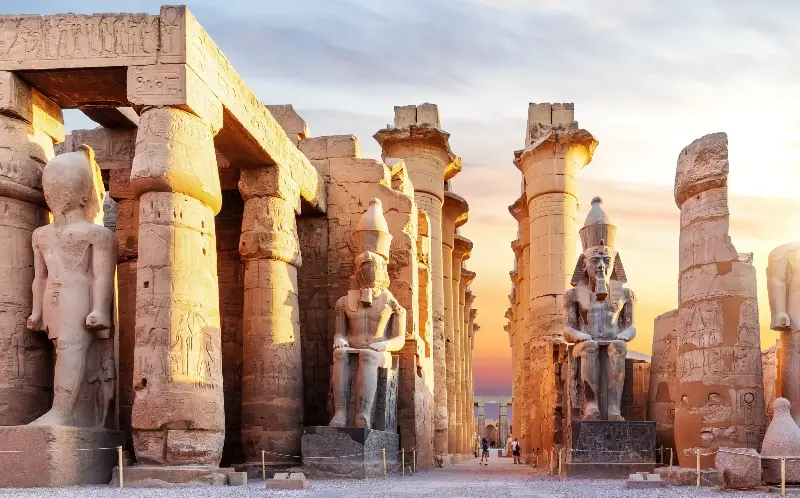
The story of ancient Egypt may be tethered to the very distant past, but it has a pleasing habit of popping up in the present. Last month saw a comeback of sorts by Amenhotep III – a powerful pharaoh of the 18th Dynasty (he ruled from 1391 to 1353BC) whose palatial tomb, closed for restoration for two decades, has just reopened in the Valley of the Kings.
While this is a perfect reason to travel to Luxor, it begs a broader question: with so many to choose from, which are the Egyptian historic sites that every traveller should try to visit? And, if you were to arrange them into some sort of order, what would that list look like?
The following 15 places are all essential elements of an epic tale, built of dust and drama.
15. Tanis
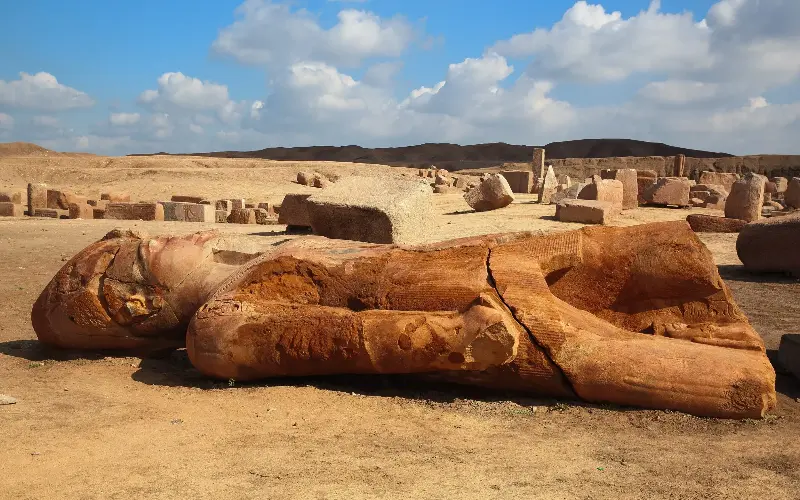
Cinephiles who remember the small details of the Indiana Jones films may recall that it is in this ruined city that the Ark of the Covenant is unearthed in 1981’s Raiders of the Lost Ark. Real-life Tanis has given up nothing quite as extraordinary to archaeologists, but it was a place of significance – the capital of the pharaohs of the 21st and 22nd Dynasties (roughly 1077-713BC). The silting up of the north-easterly branch of the Nile would render it obsolete, but the remains of its Great Temple of Amun-Ra attest to its former importance.
How to do it
Tanis is a three-hour drive north-east of Cairo. Viator sells a full-day tour to the site (reference: 5504194P1), from £133 per person.
14. Memphis
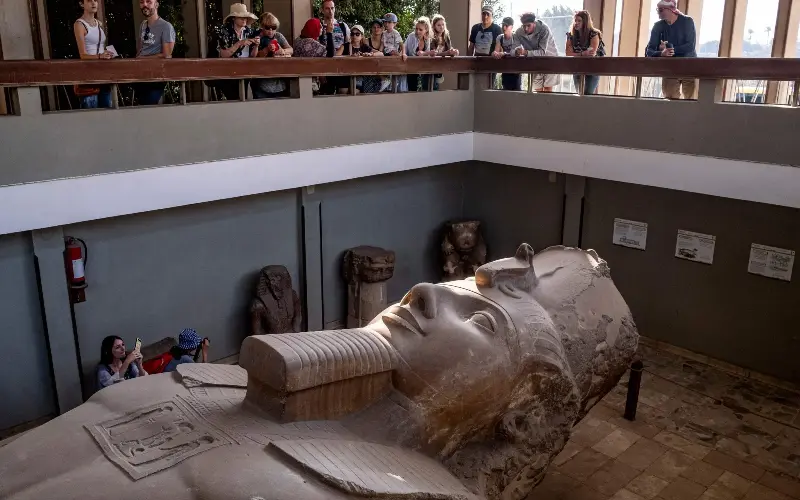
Now marooned 20 miles south of Cairo in the village of Mit Rahina, Memphis was the Egyptian capital for the best part of a millennium (around 3150-2200BC). It became a centre for the worship of Ptah (the god of craftsmen), and still has the ruins of a temple in his honour. However, its closest associations are with two flesh-and-blood rulers who rose to prominence much later: Alexander the Great, who was crowned pharaoh in the temple in 332BC, and the mighty Ramesses II, a colossus of whom still haunts the site.
How to do it
Via the “Scientific Pioneers of the Ancient World” itinerary sold by New Scientist Tours. From £2,295 per person, excluding flights.
13. Kom El Shoqafa
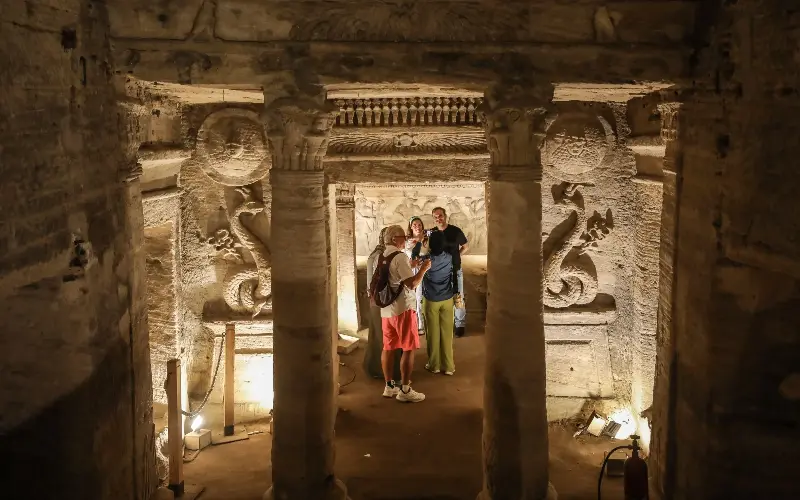
Cleopatra, Egypt’s most famous female ruler, is frustratingly difficult to trace in her home city of Alexandria: her palace has sunk to the seabed and the location of her tomb is unknown. For a while, there were suggestions that the Kom El Shoqafa catacombs – found in 1900 when a donkey fell down an access shaft – contained her and Mark Antony’s lost tomb. In fact, they did not come into use until two centuries after Cleopatra’s death (in 30BC), but the ornate burial chambers are astonishing in their beauty nonetheless.
How to do it
Via the seven-day “Short Break to Cairo & Alexandria” sold by Audley Travel. From £3,495 per person, including flights.
12. Amarna
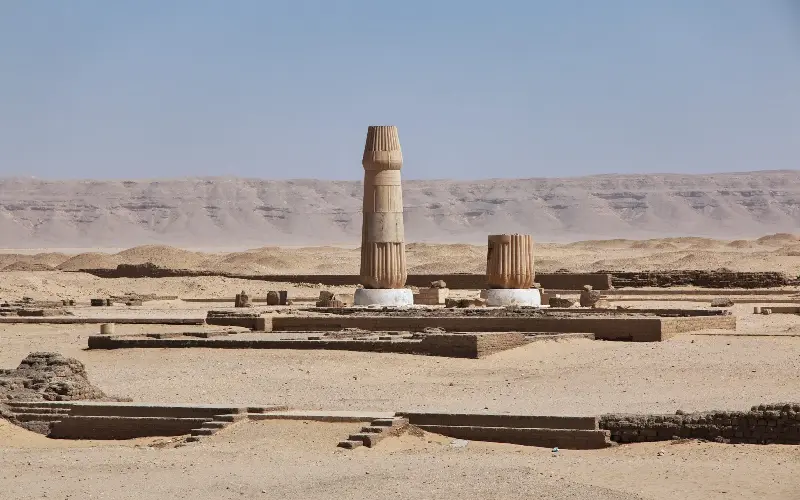
Akhenaten, who ruled from 1351 to 1334BC, was a fascinating figure. Not only was he the probable father of Tutankhamen, but he was also the “heretic pharaoh” who abolished the traditional pantheon of gods and replaced them with a lone deity, Aten. He also stripped Thebes (Luxor) of its royal status and built a new capital, Amarna, 250 miles to the north. His reforms, which proved very controversial, were reversed upon his death, with Amarna abandoned shortly afterwards. Its ruins, including Akhenaten’s empty tomb, recall a strange chapter in Egypt’s past.
How to do it
Via “Egypt Off The Beaten Track”, a 12-day journey sold by Corinthian Travel. From £4,800 per person, excluding flights.
11. Temple of Kom Ombo
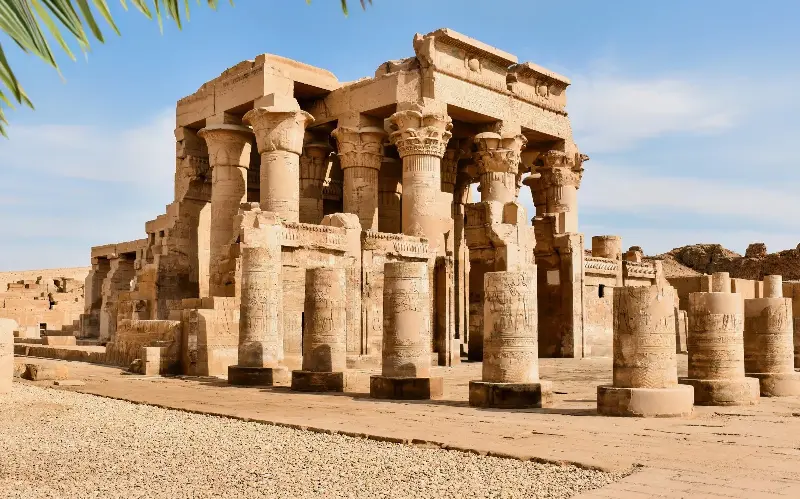
Although it was built by the Ptolemaic (Greek) Dynasty, which ruled the country between 305 and 30BC, this riverside temple is a fabulous fragment of Egypt’s history. Set on the east bank of the Nile, 100 miles south of Luxor, this feast of columns and pillars was dedicated to the most specifically Egyptian of the ancient deities, Sobek, who, as well as being the god of fertility, took the shape of a crocodile. The link is made explicit by the 300 mummified crocodiles which lie in state as part of the temple museum’s collection.
How to do it
Via the 10-day “Classic Egypt” holiday offered by Red Savannah. From £5,287 per person, excluding international flights.
10. Temple of Edfu
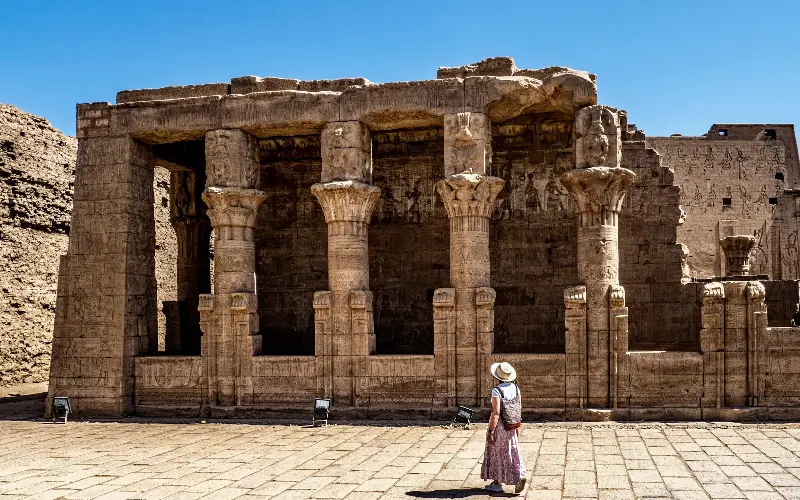
Like Kom Ombo, from which it sits 40 miles downstream, this grand pile was crafted by Ptolemaic hands between 237 and 57BC. Its relative youth – it is 2,500 years younger than the Great Pyramid – makes it one of ancient Egypt’s best-preserved structures. With its epic facade almost wholly intact, it resembles a fortress as much as a place of worship. The hieroglyphs on its walls tell a detailed story of life in Greek-run Egypt, and reveal the reverence with which the falcon-headed god of kingship, Horus, was viewed.
How to do it
Via the 13-day “Luxury Egypt with Oberoi Zahra” cruise itinerary sold by Steppes Travel. From £8,495 a head, excluding flights.
9. Philae temple complex
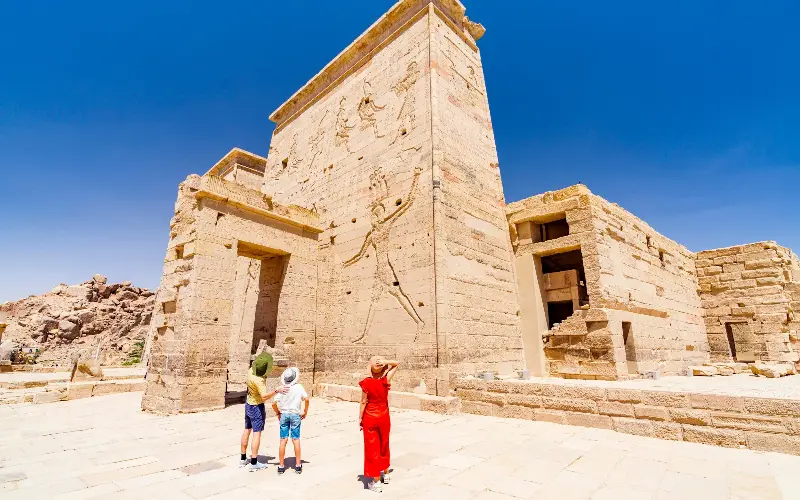
Modernity might have been the death of this largely Ptolemaic jewel, had it not been for the outcry that accompanied the news that it would be drowned by the construction of the Aswan High Dam. Swift thinking saw its honeyed buildings moved to higher ground – a new island home, Agilkia – between 1977 and 1980. But then, Philae is a survivor. It is widely accepted to have been the last bastion of Egypt’s ancient religion, with the goddess Isis secretly worshipped there until 537AD, long after the Roman Empire had embraced Christianity.
How to do it
Via the eight-day “Oberoi Philae Nile Cruise” offered by Cox & Kings. From £5,195 per person, including flights.
8. Saqqara
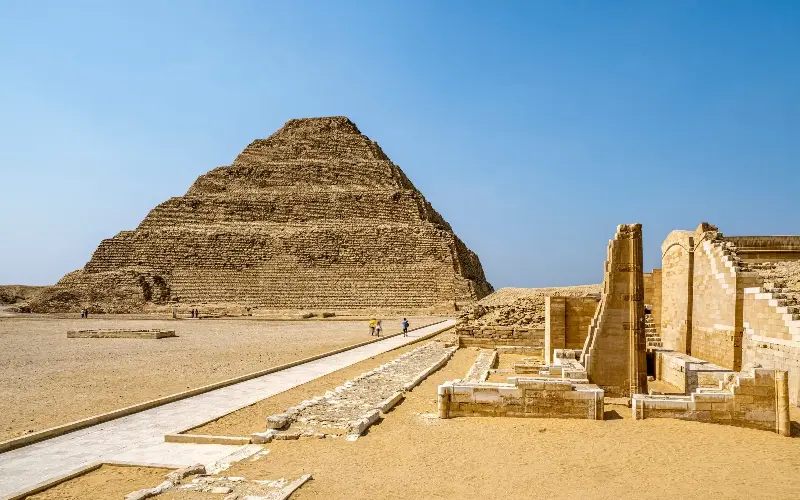
Memphis, which was fully abandoned in the seventh century AD, is now rather eclipsed by its own magnificent necropolis. Lying three miles to the west, Saqqara contains the tombs of 17 pharaohs. Chief among them is the Pyramid of Djoser, a six-tiered marvel, built for the titular pharaoh of the Third Dynasty in the 27th century BC. Pre-dating its Giza siblings by more than 100 years, it was ancient Egypt’s first pyramid.
How to do it
Via the eight-day “Egypt: Cairo and the Nile” tour sold by Abercrombie & Kent. From £3,195 per person, excluding international flights.
7. Luxor Temple
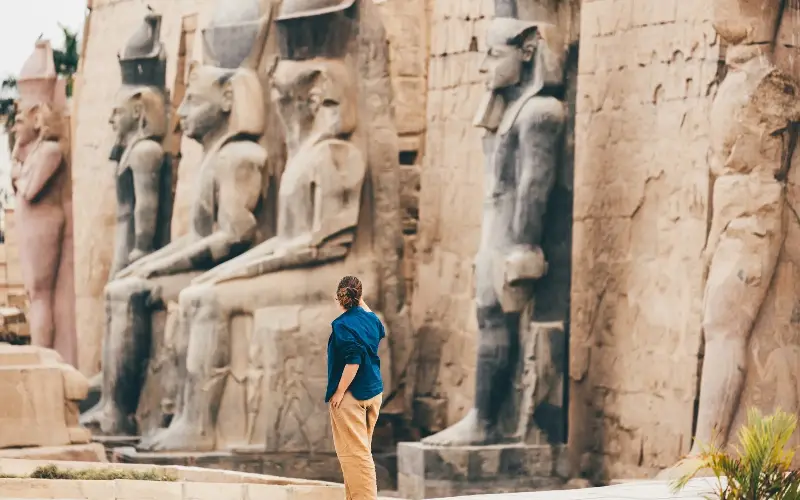
Whether in its ancient incarnation as Thebes, or its modern iteration as Luxor, this feted city of Upper Egypt is arguably the main guardian of the country’s glittering history. It was the royal capital (with one notable interruption) between 2040 and 1279BC, and still bears witness to the splendour of that era in incomparable buildings and landmarks. That the majestic Luxor Temple – erected on the very edge of the Nile in 1400BC – is not the most astonishing of these wonders only underscores the scale and depth of the city’s tale.
How to do it
Via the nine-day “Highlights of Ancient Egypt” group tour sold by Wild Frontiers. From £3,075 a head, excluding flights.
6. Valley of the Queens
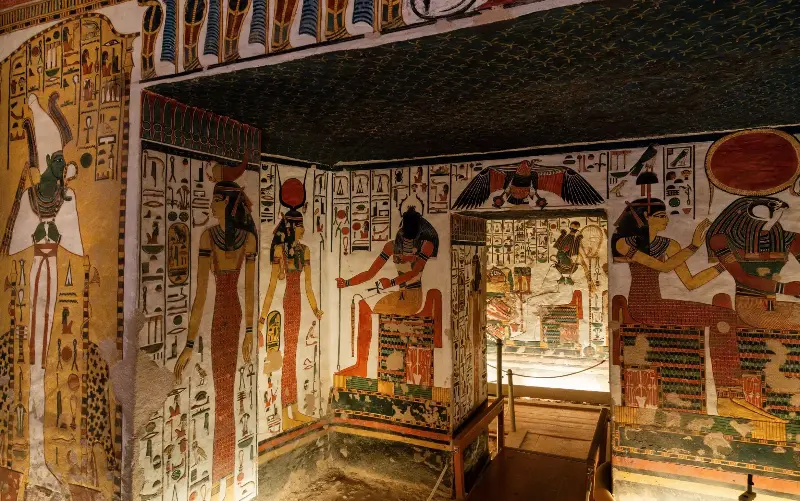
Luxor’s place at the heart of the ancient Egyptian story is further emphasised by the presence of not one, but two, royal burial grounds, five miles away, on the west bank of the Nile. In use between roughly 1560 and 1130BC, the Valley of the Queens was – as its name suggests – the resting place for the pharaonic wives and daughters of the 18th, 19th and 20th Dynasties. The best known among them, perhaps, was Queen Nefertari, wife of Ramesses II, whose regal grave, QV66, is a suitably sumptuous maze of bright paintings.
How to do it
Via the 14-night “Mystical Egypt Tour” offered by Classic Holidays. From £2,285 per person, including all flights.
5. Mortuary Temple of Hatshepsut
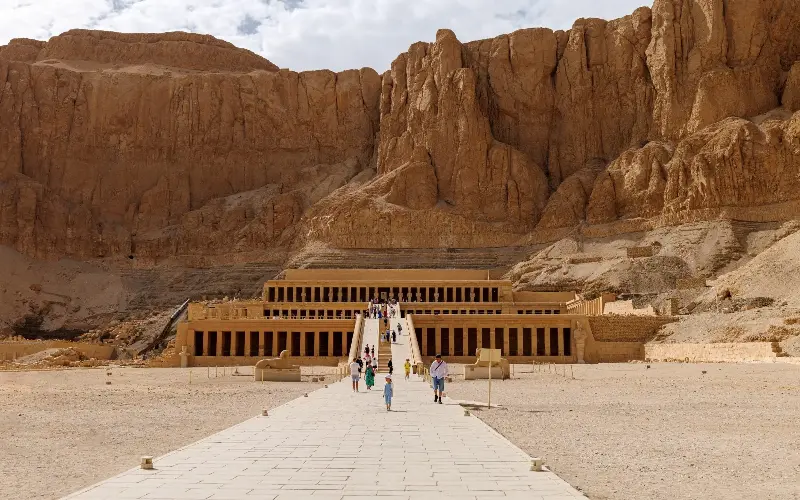
The most glaring absentee from the Valley of the Queens is the woman who would have been its foremost resident. But then, Hatshepsut was no ordinary queen. She was pharaoh in her own right, a titan of the 18th Dynasty who reigned from 1479 to 1457BC. And she wore the crown with such authority that her tomb – which is separated from Luxor’s main royal burial grounds by the Al-Qurn mountain ridge – is arguably more awe-inspiring than that of any other Egyptian ruler. It is also a reflection of her power; three gargantuan sandstone terraces rising from the desert floor – gazing back towards the city where she held court.
How to do it
Via the 11-day “Dreams of Egypt” escorted itinerary operated by Wendy Wu Tours. From £4,590 a head, including flights.
4. Valley of the Kings
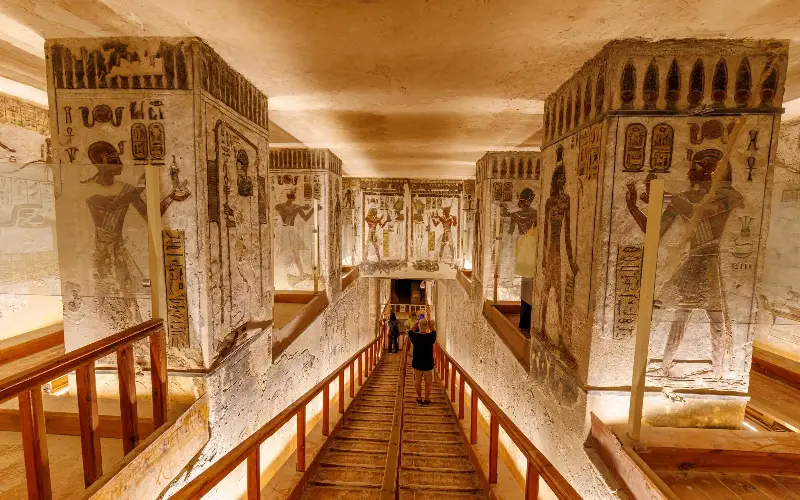
A “greatest hits” album for ancient Egypt which houses (or once housed) its foremost rulers. Its most fabled tomb is, of course, that of Tutankhamen (KV62) – discovered, to such acclaim, by Howard Carter in 1922. But this tiny chamber, where the “Boy King” still lies, is a fraction the size of some of the other graves. KV7, where Ramesses II was buried, is too damaged to be viewed, but the tomb of Merenptah (Ramesses’s son; KV8) is a hidden cathedral. The return of KV22, Amenhotep III’s tomb, only adds to the magic.
How to do it
Via the 10-day “Classic Egypt with Nile Cruise” group tour sold by Explore. From £1,495 per person, excluding flights.
3. Abu Simbel
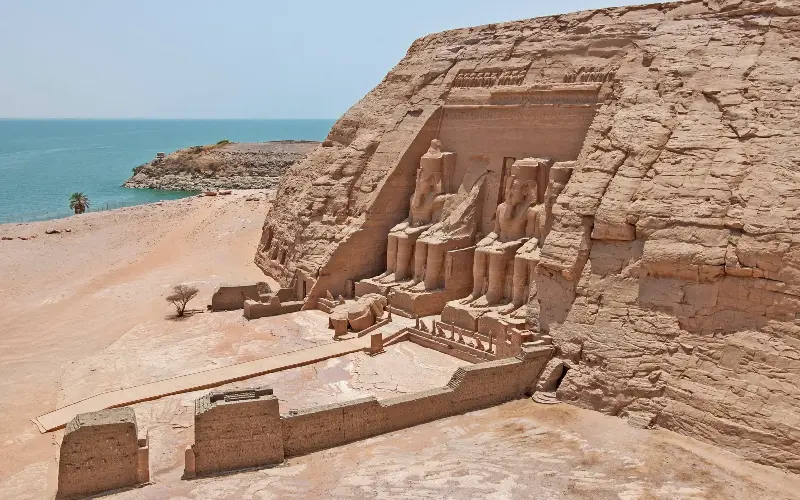
If you want to understand the pre-eminence of “Ramesses the Great”, who reigned from 1279 to 1213BC, you do not need to see his tomb. The man’s ego is carved into the twin-temple complex he had constructed near Aswan between 1264 and 1244BC. The four enormous pharaonic figures which adorn the Great Temple of Abu Simbel are all representations of… Ramesses II. That the structure was relocated (1964-1968) to avoid the rising waters of Lake Nasser and the Aswan High Dam has diminished it not one iota.
How to do it
Via the 13-day “Pharaonic Egypt: From Cairo to Abu Simbel” tour run by Martin Randall Travel. From £6,380 per person, excluding flights.
2. The Pyramids of Giza
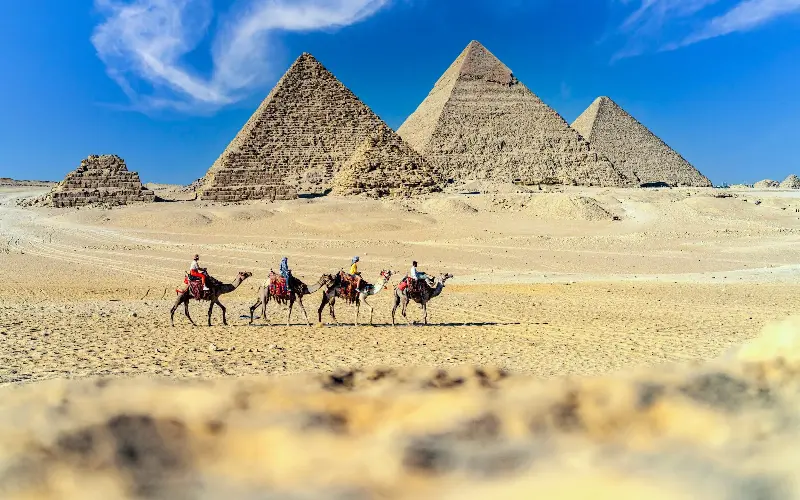
For all Ramesses’s burnishing of his own legend, the most iconic pharaonic memorial is to a king of a far older vintage. Khufu reigned between 2589 and 2566BC, and had himself interred in the only one of the Seven Wonders of the Ancient World to remain intact. As the Great Pyramid – all 454ft (139m) of it – is one of three substantial structures in the Giza necropolis (and can boast a fine sidekick in the Great Sphinx), an obvious point is clear: the Pyramids should be on everybody’s travel list.
How to do it
Via the nine-day “Highlights of Egypt” group tour offered by Exodus Adventure Travels. From £1,929 per person, excluding flights.
1. Karnak
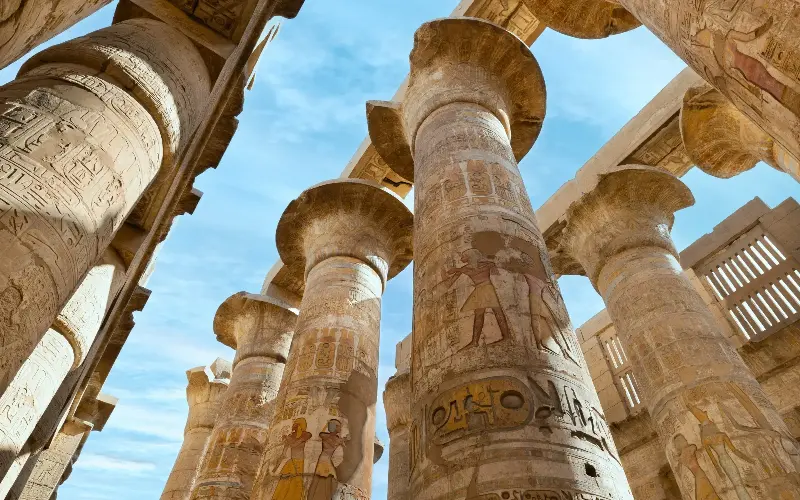
There is no more thrilling a distillation of ancient Egypt in all its glory than this temple complex on the north side of Luxor. It swelled in size and magnitude over 2,000 years, with structures being added between 1971BC and the coming of the Romans. It bears the fingerprints of pharaohs of immense influence, including Seti I, Ramesses II, Hatshepsut, Thutmose I, Thutmose III, Akhenaten and Merenptah. And in the high columns of the Great Hypostyle Hall, it sings to the soul at a volume that no other landmark can quite match.
How to do it
Via the 12-night “Exceptional Egypt” holiday offered by Scott Dunn. From £6,800 per person, excluding international flights.