



Many experts have revealed the secret to creating 'resistant starch' from rice and pasta: simply let them cool in the refrigerator, then reheat and consume.
However, does this approach actually help with blood sugar levels or weight loss? Let's see what the experts have to say.
Two types of starch and the "cooling" process
Most of the carbohydrates and calories in rice and noodles come from starch, which consists of two types: indigestible amylose and easily digestible amylopectin. Amylopectin is processed quickly and causes a spike in blood sugar, while amylose is processed slowly and regulates blood sugar.
Most undigestible carbohydrates (like those in rice and potatoes) contain indigestible starch (resistant starch), but cooking converts them into easily digestible types.
When cooked rice or noodles are refrigerated (allowed to cool for at least 12-24 hours in the refrigerator), starch degradation occurs, converting easily digestible starch into resistant starch, making it harder to digest even when reheated.
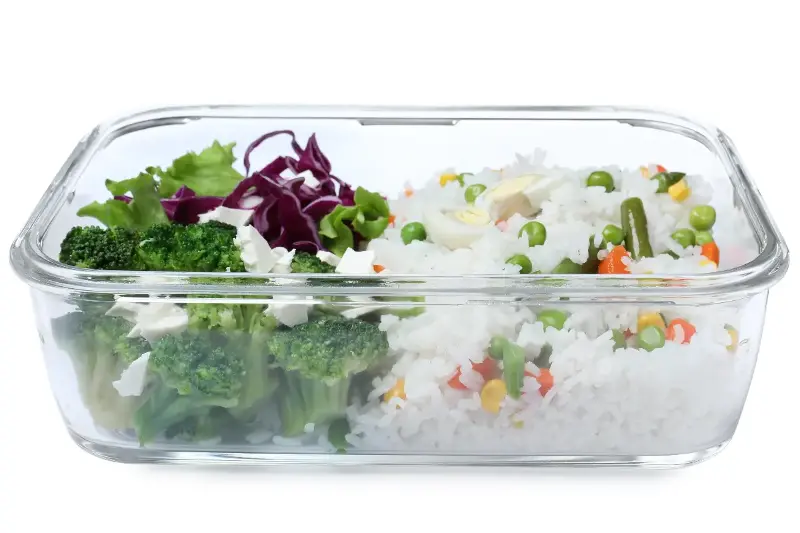
When cooked rice is refrigerated (allowed to cool for at least 12-24 hours in the refrigerator), starch degradation occurs, converting easily digestible starch into resistant starch. Photo: AI
The impact of leftover rice on blood sugar and calories.
A 2015 study showed that people who ate cooled boiled rice, noodles, and potatoes had significantly lower blood sugar levels compared to those who ate freshly cooked rice.
However, regarding calorie reduction, Dr. David Ludwig, an endocrinologist at Boston Children's Hospital (USA), explains: Cooling rice or noodles doesn't significantly change the calorie content of the food, but it can affect hormones and metabolism in a way that makes calorie control much easier.
Eating plenty of resistant carbohydrates helps reduce spikes in blood sugar and, in particular, reduces cravings.
When starch undergoes a breakdown process, it is digested more slowly, keeping blood sugar levels more stable, the body stores less fat, and dieting can be easier.
Expert advice
Professor Walter Willett, PhD, Head of the Department of Nutrition at the Harvard TH Chan School of Public Health (USA), said: For refined carbohydrates like rice and noodles, refrigeration can reduce some of their negative effects. But to be effective, it needs to be done consistently.
He noted that cooling rice and noodles would be helpful for blood sugar levels but would not restore the fiber, minerals, and vitamins lost during the refining process.
However, Dr. Willett says that the above method is not significantly effective for weight loss, and he recommends using whole grains for sustainable weight loss, according to Yahoo News.