



According to The Strait Times, a reporter from the Vietnam News Agency (VNA) in Singapore noted that Vietnam is becoming one of the top destinations in Southeast Asia for Singaporean tourists, as evidenced by strong interest on social media platforms and significant growth in the tourism industry in recent years.
According to data from the Vietnam National Tourism Administration (VNAT), Vietnam's tourism revenue has increased rapidly over several decades, from VND 1.34 billion in 1990 to VND 355 trillion in 2010 and is projected to reach approximately VND 840 trillion (equivalent to Singapore dollars 40.6 billion) in 2024. Following the COVID-19 pandemic, Vietnam has also emerged as the fastest-recovering tourism market in Southeast Asia, with international visitor numbers reaching approximately 98% of pre-pandemic levels in 2019.
Experts believe that fundamental factors such as a stable political environment, a quality education system, and increasingly improved infrastructure have contributed to long-term growth momentum. Gareth Leather, senior economist for Asia at global macroeconomic firm Capital Economics in London, assesses that these factors have helped Vietnam maintain stable development over the past years and continue to strengthen its position on the regional tourism map.
Vietnam is currently attracting international tourists thanks to its combination of rich history, diverse natural landscapes, and reasonable costs. Street culture, cuisine , and affordable health and beauty services are increasingly appealing to young travelers from Singapore and other countries in the region. Nadia Lim, 25, a social media marketing specialist, has visited Ho Chi Minh City twice in just six months. She shared: “For Singaporeans, it’s an easy place to travel. Prices are good, and I feel people really enjoy shopping and eating in Vietnam.”
The growth prospects for Vietnam's tourism industry in the coming years are considered positive. The government aims to welcome approximately 50 million international tourists by 2030. Simultaneously, many international hotel groups have been expanding their operations in Vietnam. Businesses in the accommodation sector believe that Vietnam possesses a combination of high tourism demand, improving living standards, and increasingly convenient connectivity.
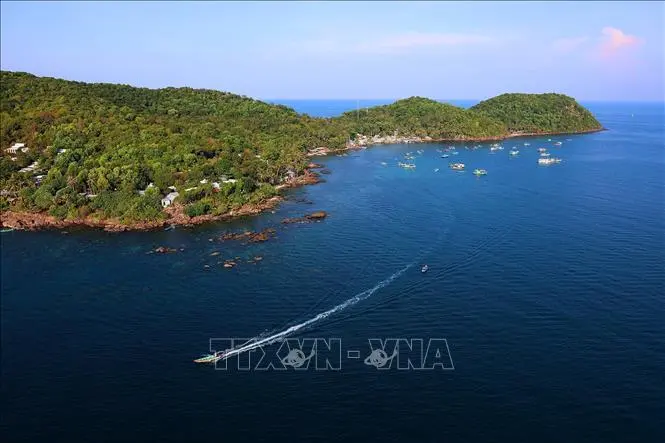
In addition, large-scale projects continue to be implemented to enhance the capacity to serve tourists. Many international corporations are collaborating to develop resorts and hotels in key destinations such as Phu Quoc and Vung Tau, contributing to expanding the supply of rooms in the coming years. In areas with scenic advantages such as the North and Central regions, the trend of wellness tourism is also developing, with the participation of international hotel brands such as Melia Hotels International and Hilton Hotels & Resorts.
This demand is fueled by improved air connectivity, with the opening of many new routes, increasing accessibility for international tourists. According to VNAT statistics, the number of tourists from Singapore is projected to increase by 15.5% year-on-year in 2025. New routes launched in recent years have contributed to increased accessibility. For example, the low-cost airline Scoot began flying to Phu Quoc in December 2024, followed by Nha Trang, a coastal city in southern Vietnam, in November 2025.
However, several risk factors remain. Experts warn that geopolitical tensions and energy price volatility could impact global economic growth, thereby affecting tourism demand. In the context of rising costs, travelers tend to be more price-sensitive, potentially reducing their spending on travel.
Nevertheless, the overall outlook for Vietnam's tourism industry remains positive. According to VNAT, Vietnam recorded its highest tourism growth in the first quarter of 2026 with 6.76 million international visitors, a 12.4% increase compared to the same period last year. Key markets such as China, South Korea, and Taiwan (China) continue to be the main drivers of demand.